Serving the Carolinas
10 Signs of Water Damage (and How to Address Them)
Water damage often shows up before a flood does. Here are ten signs Charlotte-area homeowners should not ignore, and what to do about each one.
10 Signs of Water Damage (and How to Address Them)
Look for stains, peeling or bubbling paint, soft or warped floors, a musty smell, visible mold, a water bill that jumps, the sound of running water, a sagging ceiling, damp or cold spots, and swollen baseboards. If you find one of these signs, stop the water if you can do that safely, stay away from electrical hazards, take photos, and call a professional. For help in Charlotte or nearby, see our water damage restoration page. If you fill out the form at https://247ert.com/contact-us/, we will contact you ASAP. For an emergency, call (704) 525-4552.
Not every water problem starts with a flooded room. In Charlotte and nearby communities, water often shows up first as a stain, a soft spot, a smell, or a bill that does not make sense. Catching those signs early helps you stop the source and dry the structure sooner.
This guide covers ten signs we see most often, and what to do when you find one. For a closer look at how the damage appears on walls, floors, and ceilings, read our guide on what water damage looks like. For help in Charlotte or nearby, see our water damage restoration page.
Ten signs of water damage, and what to do about each one
Walk the house if you can, including the basement, crawl space, attic, bathrooms, kitchen, laundry, and water heater. One sign can be easy to explain away. Two or three in the same area usually mean it is time to act.
1. Water stains on walls, ceilings, or floors
Stains often look like a yellow, brown, or gray patch or ring under a bathroom, near a window, behind a toilet, or along a baseboard. A stain that grows, feels damp, or comes back after you wipe it is still active.
What to do: Take a photo, check the room or floor above, and do not paint over it yet. If the stain is spreading or feels wet, call for a moisture check.
2. Peeling paint or bubbling wallpaper
Paint that peels, blisters, or bubbles, and wallpaper that lifts at the seams, often means moisture is in the wall or coming through from behind. The finish is telling you the surface is no longer dry.
What to do: Leave the finish in place if you can, and look nearby for a stain, soft drywall, or a musty smell. Find the moisture source before any new paint goes on.
3. Warped, buckling, or soft floors
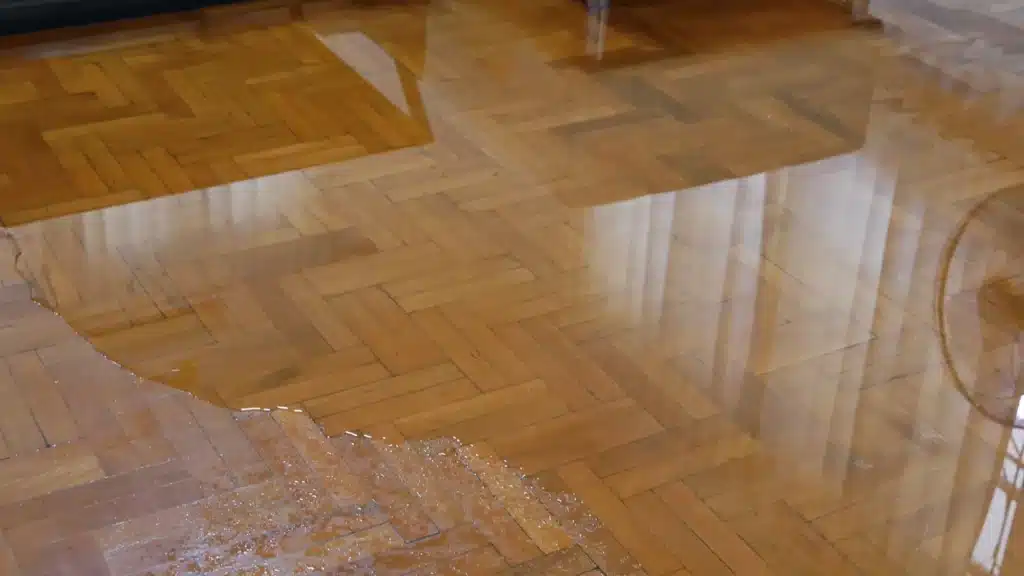
Hardwood that cups or gaps, laminate that tents, and a floor that feels soft or uneven often mean the subfloor is wet. In Charlotte homes, this often starts at a dishwasher, refrigerator line, or water heater.
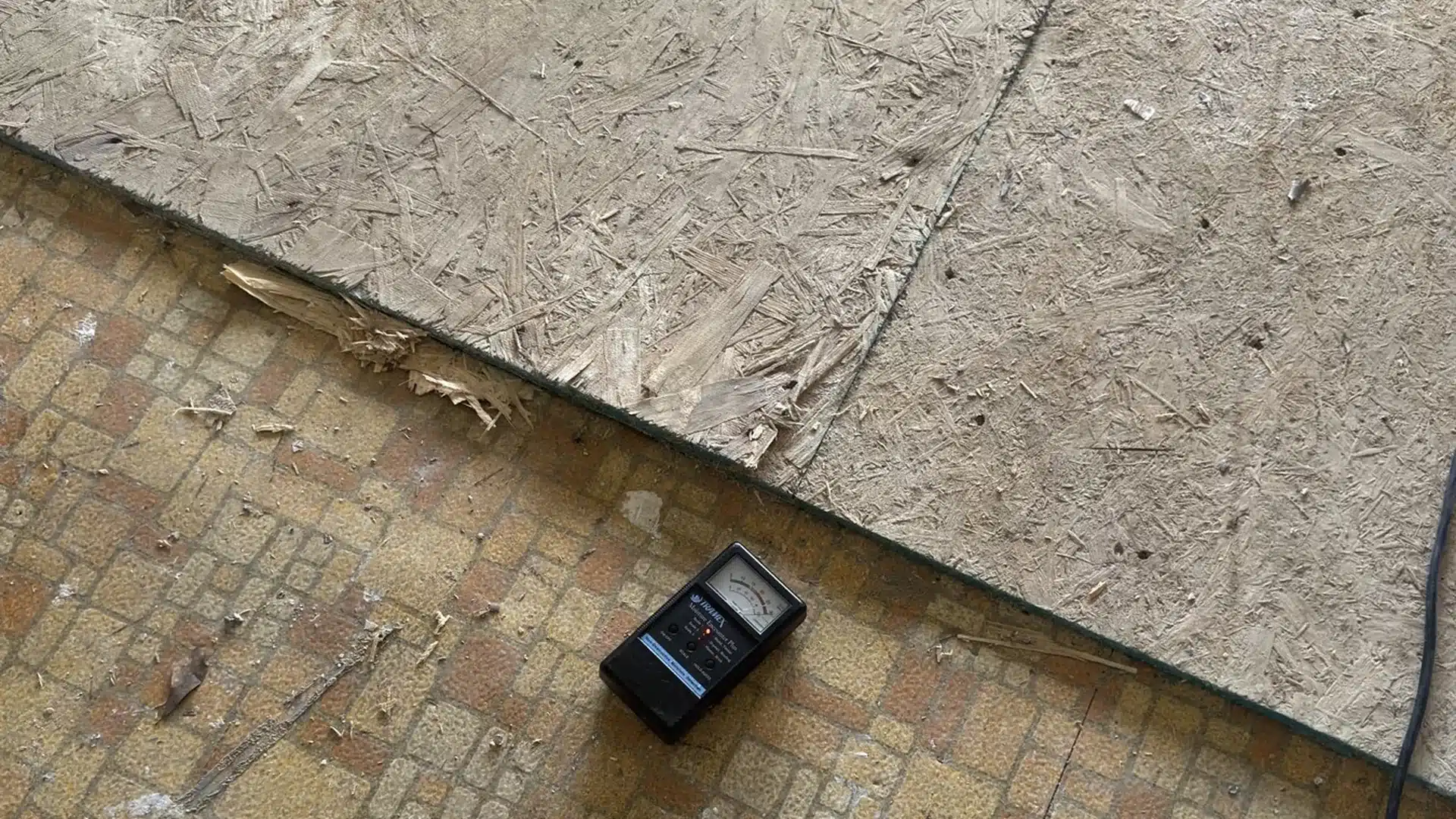
What to do: Stay off a floor that feels unsafe. Wet flooring often has to be opened so the structure underneath can dry. See our water damage restoration in Charlotte page if you need help.
4. A musty smell that will not go away
A damp or musty odor in one room, a closet, the basement, or the crawl space is often moisture you cannot see yet. It may be stronger after rain or when you first open a door, and it can show up before a stain does.
What to do: Follow the smell to the strongest spot and check for a stain, soft trim, or a wet floor. If the odor stays, have the area inspected. Our guide to hidden moisture behind walls explains why this matters.
5. Visible mold on walls, trim, or belongings
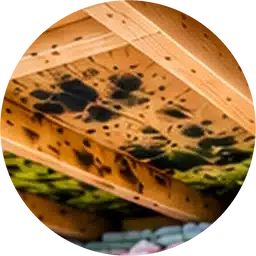
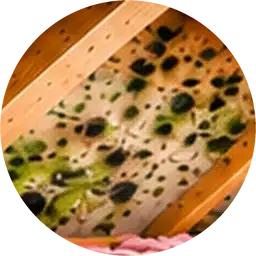
Mold can look like black, green, gray, or white spotting on drywall, trim, grout, or boxes, often in a bathroom, basement, closet, or around a past leak. Visible growth means moisture has been present long enough for it to take hold.
What to do: Do not scrub a large area or blow fans on the growth. Have the moisture source found. The EPA notes that drying water damaged areas within 24 to 48 hours helps prevent mold growth. For cleanup in Charlotte, see our mold remediation page. If testing is needed, it is coordinated through an independent third-party lab.
Need help right now?
We answer 24/7 and aim to be on site within about 60 minutes in the Charlotte area. Call (704) 525-4552. If you fill out the form at 247ert.com/contact-us, we will contact you ASAP.
6. A water bill that jumps without a clear reason
If no one has been watering more or hosting extra guests, a sudden jump in your water bill can mean a leak on a supply line, a running toilet, or a break you cannot see yet.
What to do: Check toilets, look under sinks and at the water heater, and walk the yard for a soft or unusually green patch. If your meter still moves when every fixture is off, call a plumber, and call a restoration company if water has already reached the house.
7. The sound of running water when nothing is on
A hiss, trickle, or running sound in a wall, ceiling, or floor when every faucet is off can be a supply line, a toilet fill valve, or a drain that is not sealed. It is often easiest to hear at night, when the house is quiet.
What to do: Find the room where the sound is loudest. If you can do it safely, shut the water off at the fixture or the main valve. Do not cut a hole in the wall yourself. Call for help before the leak soaks more of the structure.
8. A sagging or stained ceiling
A ceiling that bows, sags, or shows a growing stain is often holding water from a bathroom, attic, roof, or supply line above. The drywall can fail suddenly once it is heavy enough. For more on this, see water damage in ceilings.
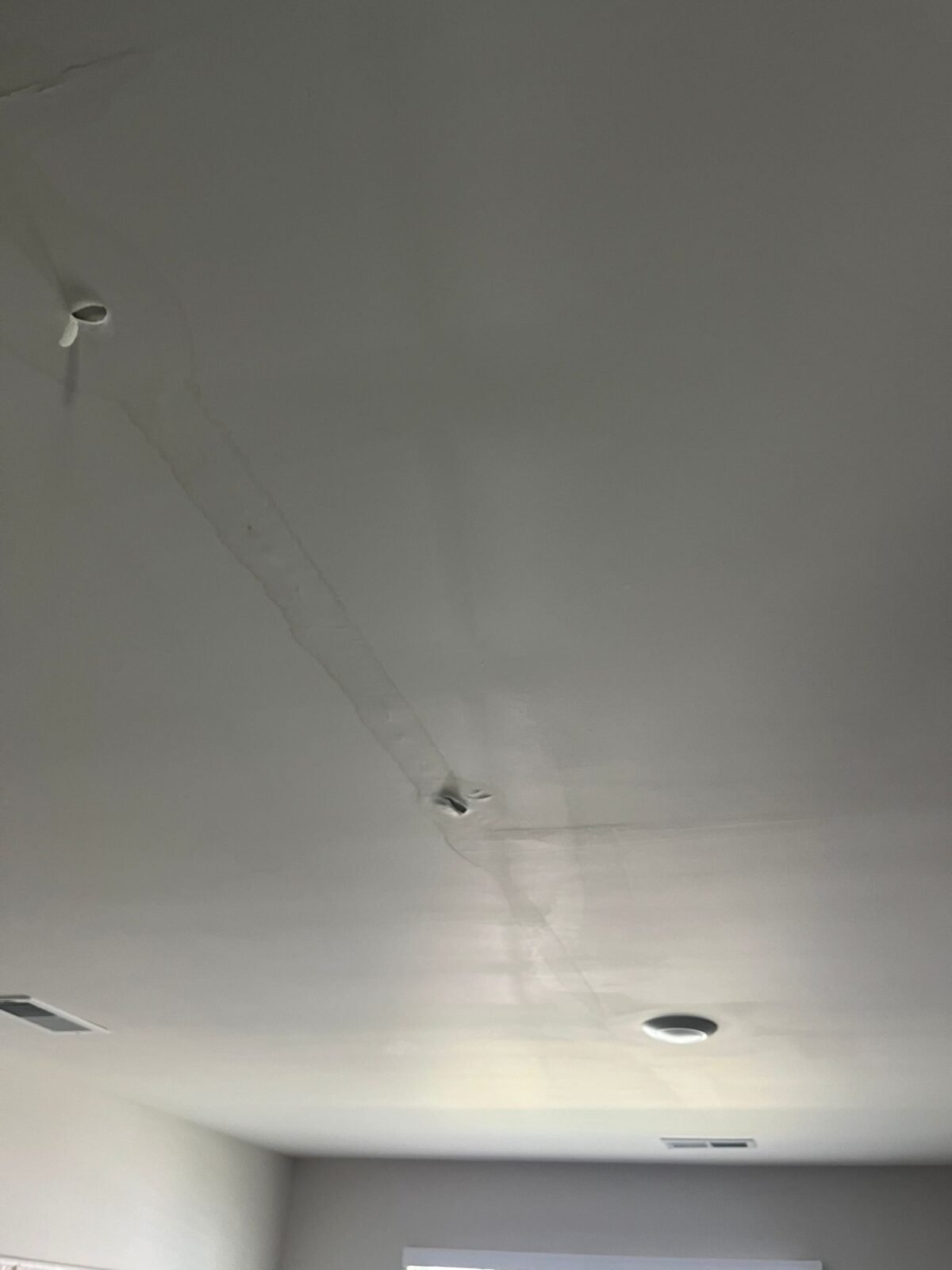
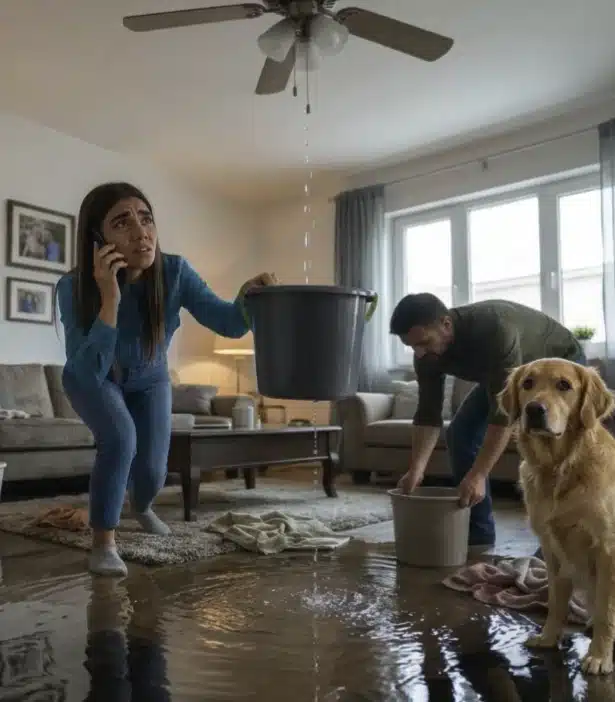
What to do: Get people and pets out from under that part of the ceiling. If water is dripping, put a bucket under it, and do not poke a hole in a heavily sagging ceiling. If you can do it safely, stop the water, then call for help.
9. Damp or cold spots, or indoor air that feels too humid
A wall or floor that feels cold or clammy compared with the rest of the room can mean moisture is in the material, even when the paint still looks fine. A room that feels sticky when the rest of the house does not is also worth a closer look.
What to do: Check nearby plumbing, windows, and the attic or crawl space. A dehumidifier can make the air more comfortable, but it will not dry a wet cavity by itself. If the patch stays, have it checked with a meter.
10. Swollen baseboards or trim
Wood trim, baseboards, door casings, and cabinets that swell, soften, stain, or pull away from the wall have usually taken on water from a floor, a slow leak, or a spill along the edge of a room. This is easy to walk past because it can look like ordinary wear.
What to do: Press gently along the trim. If it feels soft, crumbly, or wet, take photos and have the area inspected so the water can be removed and the wood can dry, or be replaced if it is too far gone.
How to address it
Once you have a sign, stop the water if you can. Shut off the fixture, or the main valve, from a dry, safe place. Do not step into standing water near outlets, cords, or a breaker panel. If you can reach the panel from a dry area, shut off power to the wet rooms. Then take photos of each affected room, the source if you can see it, and close-ups of the damage. We can work with your insurance company and document the damage for your claim, but we cannot file it for you or promise how it comes out.
Towels and a box fan are not enough once water is in flooring, drywall, or a ceiling. The EPA notes that drying water damaged areas within 24 to 48 hours helps prevent mold growth. Emergency Restoration Team answers 24/7 at (704) 525-4552 and can inspect, extract standing water, and dry the structure. If the problem is in a basement, start with what to do when a basement floods in Charlotte. If you fill out the form at https://247ert.com/contact-us/, we will contact you ASAP. For an emergency, call (704) 525-4552.
How to address water damage once you find a sign
Stop the source, stay safe, document what happened, then call for help.
Stop the water if you can
Shut off the fixture, or the main valve, if you can do that from a dry, safe place. Stay out of water that may be contaminated.
Stay safe around electricity
Do not walk through standing water near outlets, cords, or a breaker panel. If you can reach the panel from a dry area, shut off power to the wet rooms.
Take photos for your claim
Photograph the rooms, the source if you can see it, and close-ups of the damage for your insurance claim.
Call a professional quickly
Wet floors, ceilings, and walls need to be dried on purpose. Call (704) 525-4552. We answer 24/7 in the Charlotte area.
Related services
From first call to final walkthrough, one company handles it all.

Water damage restoration
Emergency water removal, structural drying, and documentation after a leak, flood, or appliance failure.
View this service
Mold remediation
We contain the area, remove the growth, and dry the structure so mold does not come back for the same reason.
View this service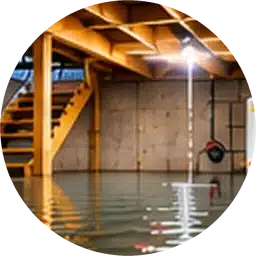
Basement water removal
We extract the standing water, dry the structure, and document the damage in a finished or unfinished basement.
View this serviceWe handle the claim documentation for you
Coverage depends on the cause of loss and the policy. Emergency Restoration Team helps document damage and works with insurance companies during the restoration process. This is documentation support, not a promise that a claim will be paid or that insurance is 100% handled.
Damage documentation
Every affected area photographed and logged to support your claim.
Adjuster coordination
We communicate directly with your adjuster to simplify approvals.











What customers say
Water damage questions, answered
What are the earliest signs of water damage?
The first signs are often a stain, peeling or bubbling paint, a musty smell, swollen trim, or a floor that feels soft. A water bill that jumps, or the sound of running water when nothing is on, can also mean a hidden leak. If you are not sure what you are seeing, call (704) 525-4552 and we can take a look.
Can I just paint over a water stain?
Paint covers the mark. It does not fix the moisture that caused it. If the leak is still active, the stain usually comes back, and the materials behind the paint can stay wet. Find the source, dry the area, and then repair the finish.
How soon can mold grow after a leak?
It can start when materials stay wet. The EPA notes that drying water damaged areas within 24 to 48 hours helps prevent mold growth. That is why it is better to dry the structure promptly than to wait and see. If testing is needed later, it is coordinated through an independent third-party lab.
Should I call my insurance company or a restoration company first?
Take photos first, then call for help. Many policies cover sudden water damage, but it depends on your policy and the cause of the loss. We document the damage and work with your insurance company on your claim. We cannot file your claim for you or promise how it comes out.
When should I call a professional?
Call if you see standing water, a sagging ceiling, soft floors, visible mold, or a leak you cannot find or stop. Call if water may have reached electrical outlets or the breaker panel. Emergency Restoration Team answers 24/7 at (704) 525-4552. If you fill out the form at https://247ert.com/contact-us/, we will contact you ASAP. For an emergency, call (704) 525-4552.
Related articles
Written by Jaime Erausquin
Jaime Erausquin is the owner of Emergency Restoration Team (ERT), a certified restoration contractor serving Charlotte NC and surrounding communities. IICRC certified with hands-on experience in water damage, fire restoration, mold remediation, and storm damage recovery.
We come to you — across the greater Charlotte region
24/7 restoration for residential and commercial properties throughout the Carolinas — same IICRC-certified process everywhere we dispatch.
North Carolina
More restoration services






Get a free water damage inspection
IICRC-certified technicians, photo documentation for your insurer, and a written scope before any work begins. Call (704) 525-4552 or send this form. If you fill out the form at https://247ert.com/contact-us/, we will contact you ASAP. For an emergency, call (704) 525-4552.
Know Someone Who Needs Our Help?
If a friend, neighbor, or customer is dealing with water, mold, or fire damage, send them our way. Fill out the quick referral form and, when their job is complete and invoiced, we'll thank you with a bonus of up to 10% of the job.
Refer Someone
Ready For Immediate Help?
Our team is available 24/7 for water, fire, and mold emergencies in Charlotte.