Water Damage • Emergency Response • Charlotte NC & Fort Mill SC
Emergency Water Extraction vs Water Mitigation: Act Immediately Before Damage Spreads
Understanding the difference between water extraction and water mitigation can save your property from mold, structural damage, and expensive repairs.
Why understanding this difference matters immediately
When water damage hits, most homeowners focus on removing visible water. That is only part of the problem. The real damage often continues behind walls, under flooring, and inside materials long after the surface looks dry.
At Emergency Restoration Team, we see this every day across Charlotte, Gastonia, Matthews, Pineville, Huntersville, and Fort Mill SC water damage restoration. What starts as a small leak quickly turns into a major restoration project when the wrong steps are taken early.
Emergency warning
Water damage does not dry on its own. Even if the surface feels dry, moisture continues spreading and damaging hidden areas. Delaying proper mitigation is one of the biggest causes of mold and structural failure.
What is emergency water extraction
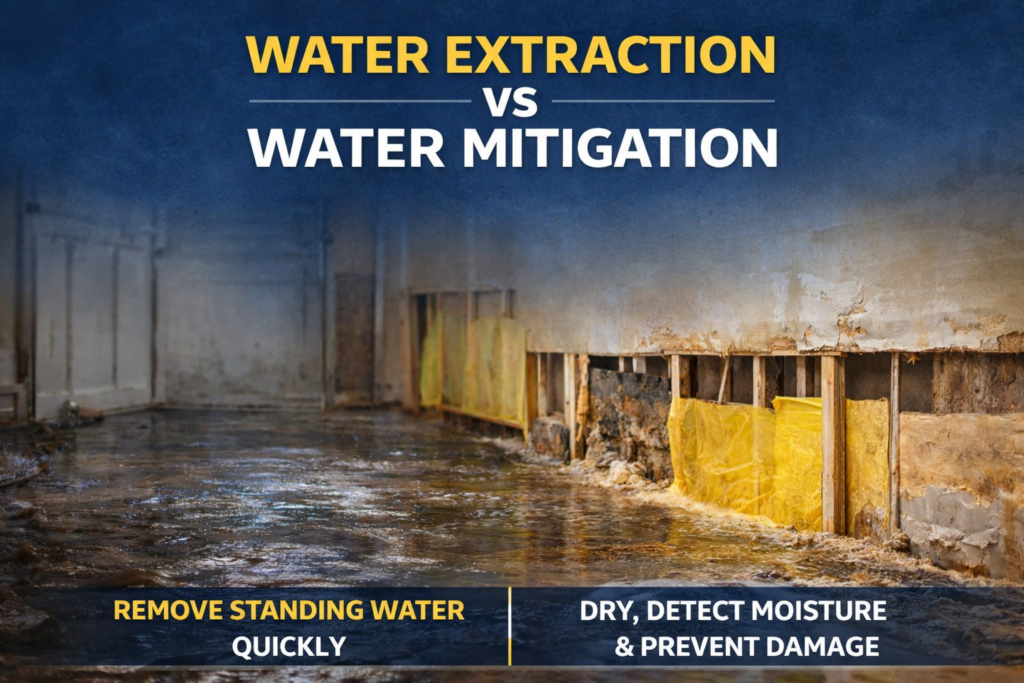
Emergency water extraction is the first step. The goal is to remove standing water as quickly as possible before it spreads deeper into the structure.
- Fast response to stop water spread
- Use of pumps and industrial extraction equipment
- Removal of water from floors, carpets, and surfaces
If you are dealing with active water damage right now, start with our water damage restoration Charlotte NC service for immediate response.
What is water mitigation
Water mitigation begins after extraction and focuses on preventing further damage. This is where most of the real work happens.
- Drying and dehumidification
- Moisture detection inside walls and floors
- Removal of damaged materials
- Sanitization to prevent mold and bacteria
According to the EPA, mold can begin growing within 24 to 48 hours when moisture is left untreated.
Key difference between extraction and mitigation
These two steps are often confused, but they serve completely different purposes.
- Extraction removes visible water
- Mitigation removes hidden moisture
- Extraction is immediate
- Mitigation prevents long term damage
If this step is skipped or delayed, damage continues getting worse. Read why water damage gets worse over time to understand how quickly this escalates.
Why immediate action is critical
- Mold can start within 24 to 48 hours
- Materials weaken as moisture spreads
- Damage moves beyond visible areas
- Costs increase significantly with delay
What most homeowners get wrong
Most people think removing water solves the problem. It does not. The real damage is what you cannot see. Without proper drying and monitoring, moisture remains trapped and continues destroying the structure.
The full restoration process
- Inspection and moisture mapping
- Emergency water extraction
- Drying and dehumidification
- Cleaning and sanitizing
- Repair and reconstruction if needed
For major losses, the FEMA also emphasizes the importance of immediate mitigation to reduce long term damage.
DIY vs professional restoration
DIY cleanup might work for very small clean water spills. But once water reaches drywall, flooring, or hidden areas, professional equipment and expertise are required.
- DIY misses hidden moisture
- Professionals use moisture meters and drying systems
- Proper mitigation prevents costly rebuilds
You can also read DIY vs professional water damage cleanup for a deeper comparison.
Final takeaway
Emergency water extraction handles the immediate problem. Water mitigation prevents the damage you cannot see. Both must happen quickly to protect your property.
Waiting even a few hours can turn a simple cleanup into a full reconstruction project.
Do not wait on water damage
The longer you wait, the worse it gets. Take action now before hidden moisture turns into major damage.
24/7 Emergency Restoration Team (704)525-4552
Chat with our experts anytime (704)741-4721