Water Damage • DIY vs Professional
Water Damage DIY vs Professional Cleanup: What Actually Saves You Money
A small water issue can look manageable at first, but hidden moisture is where homeowners usually lose money. Here is what Emergency Restoration Team wants Charlotte area property owners to know before trying to handle water damage alone.
Water damage hits fast, and most homeowners immediately ask the same question: can I clean this up myself, or do I need a professional? At first, do it yourself cleanup feels like the cheaper choice. You grab towels, a wet vac, a few fans, and try to dry everything out as quickly as possible. The problem is that water damage rarely stays where you can see it.
At Emergency Restoration Team, we regularly see homes in Charlotte, Matthews, Pineville, Gastonia, Huntersville, Fort Mill, Rock Hill, and Waxhaw where what looked like a small leak turned into major repairs because moisture stayed trapped behind walls, under floors, or inside cabinets. The visible water is only part of the problem.
This guide breaks down when a small cleanup may be manageable, when calling a professional makes more financial sense, and why delayed action can lead to mold, structural damage, and expensive reconstruction.
When DIY Water Damage Cleanup Might Work
There are a few limited situations where basic cleanup may be enough, especially if the water is clean and you act immediately.
Small clean water spills
If the source is clean water, such as a minor appliance leak or a very small overflow caught right away, and the affected area is limited, you may be able to remove the water before it spreads deeper.
Hard non porous surfaces
Tile, metal, and some sealed concrete surfaces are easier to clean and dry than carpet, wood flooring, drywall, insulation, or baseboards. Once water reaches porous materials, the risk goes up quickly.
Immediate action
The sooner the water is removed, the better your odds. Waiting even a few hours can allow moisture to soak deeper into materials and create problems you cannot see.
Quick warning before you try to handle it yourself
Water damage that looks minor on the surface often keeps spreading behind walls, under flooring, and into structural materials. That is where small jobs turn into expensive rebuilds.
The Hidden Risks of DIY Water Damage Cleanup
This is where most homeowners get burned. The mistake is assuming a surface that feels dry is actually dry all the way through.
Moisture you cannot see
Water moves behind drywall, under flooring, into insulation, and around framing cavities. Without moisture meters and thermal inspection tools, you are guessing. That guess can get expensive.
Mold growth can begin fast
Mold does not need much time once materials stay damp. In the right conditions, especially with humidity in the Charlotte area, mold growth can begin in as little as 24 to 48 hours. If you are already noticing odor or discoloration, review our mold removal service page and our related article Mold in Your Home? Here’s How to Know if It’s a Serious Problem.
Structural materials start weakening
Drywall softens. Subfloors swell. Trim separates. Hardwood cups. Cabinets absorb moisture. The longer materials stay wet, the higher the chance that drying alone will not be enough and repairs or full rebuild work become necessary.
Delayed action causes secondary damage
Water does not dry on its own the way people hope it will. It often keeps spreading, keeps soaking, and keeps damaging hidden areas. That is why quick response matters so much after a leak, flood, overflow, or burst pipe.
What Professionals Do Differently
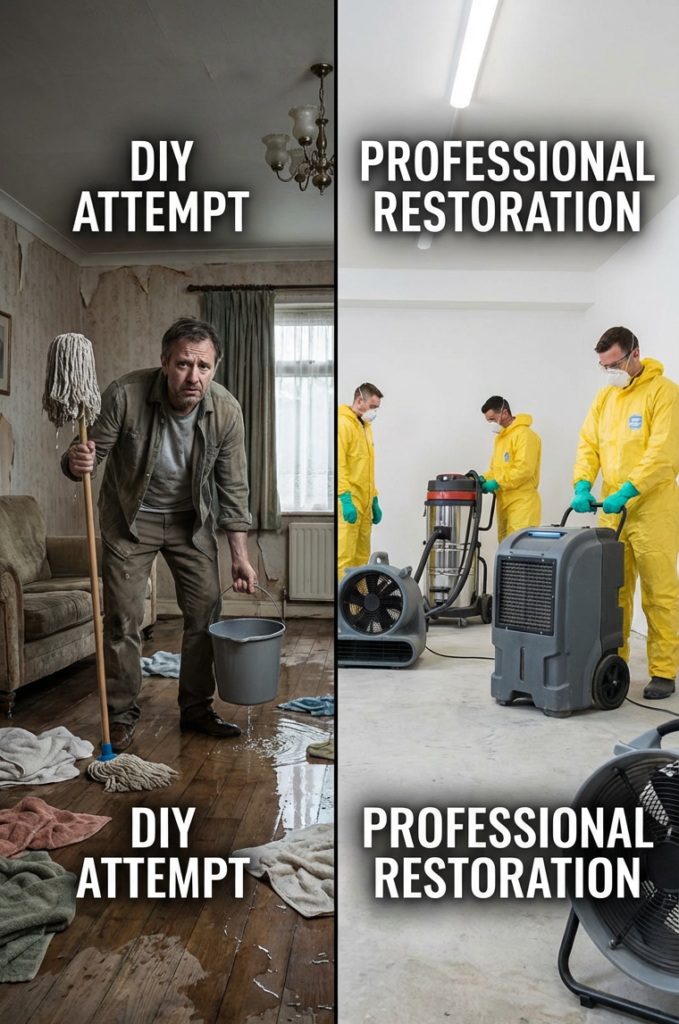
Professional restoration is not just about removing visible water. It is about controlling the entire drying process and documenting what happened.
Moisture mapping
A professional team checks walls, floors, trim, cabinets, and nearby rooms to identify how far the water traveled. This is one of the biggest differences between basic cleanup and real restoration.
Industrial drying equipment
Household fans move air. Professional air movers and dehumidifiers remove moisture at a much higher level and are positioned strategically based on affected materials and airflow.
Controlled drying and monitoring
Drying should be monitored, not guessed. Moisture readings tell you whether materials are actually drying or just looking better on the surface.
Insurance documentation
Emergency Restoration Team documents the affected areas, equipment placement, and drying progress. That matters if the claim is covered and you need support showing the extent of damage and the restoration work performed.
If you are dealing with active damage now, review our water damage restoration Charlotte NC page for emergency response details.
What real water damage restoration is supposed to do
Real restoration is not just drying what you can see. It is locating hidden moisture, drying the full affected assembly, documenting the loss, and reducing the risk of mold, demolition, and future claims issues.
DIY Cost vs Professional Cost
DIY cleanup usually looks cheaper only in the first few hours. Once moisture is missed, costs climb fast.
- DIY has lower upfront cost but much higher risk of hidden damage
- Professional restoration costs more upfront but helps prevent mold, material loss, and reconstruction
- In many covered losses, insurance may help with proper emergency mitigation and drying
The real cost question is not “Can I wipe this up?” It is “What will this cost me if hidden moisture gets missed?”
When You Should Call Immediately
You should stop trying to handle it yourself and call for professional help right away if you notice:
- Water soaking into drywall or baseboards
- Water under flooring or carpet
- Bubbling paint or swollen trim
- Musty smells or visible discoloration
- A leak that has likely been going on longer than you first thought
- Overflow, sewage, storm intrusion, or contaminated water
If the issue came from a burst pipe, also read our related post Pipe Burst Water Damage Emergency. If the water came from storms or roof leaks, our storm damage restoration page may also help.
Why Speed Matters in Charlotte NC
In Charlotte and the surrounding NC and SC service areas, humidity makes water damage worse faster. Moisture trapped indoors can linger longer, which increases the risk of mold and material breakdown. What could have been a straightforward drying job can turn into repairs, demolition, and rebuild work if action is delayed.
If damage has already gone beyond cleanup, see our rebuild and renovations page to understand how Emergency Restoration Team helps take a project from emergency mitigation through reconstruction.
What Trusted Industry Sources Say
The restoration industry relies on standards and proper drying procedures for a reason. The IICRC is one of the most recognized organizations for restoration standards and certification. For homeowners dealing with storm or flood related situations, resources from FEMA and mold guidance from the EPA also reinforce how important quick drying and proper cleanup really are.
Service Area Coverage
Emergency Restoration Team provides 24/7 water damage help across Charlotte NC, Matthews NC, Pineville NC, Gastonia NC, Huntersville NC, Fort Mill SC, Rock Hill SC, Waxhaw NC, and surrounding areas.
For more local service information, visit our Charlotte water damage page and related restoration resources throughout the region.
Need help now?
Water damage does not wait, and neither should you.
24/7 Emergency Restoration Team (704)525-4552
Chat with our experts anytime (704)741-4721
FAQ
Can I use fans to dry water damage myself
Fans can help move air, but they do not tell you whether moisture is still trapped inside walls, floors, or insulation. That is where many DIY efforts fail.
How fast can mold grow after water damage
In the right conditions, mold can begin developing within 24 to 48 hours if materials remain damp.
Does professional water damage cleanup really save money
In many cases, yes. Professional drying can prevent hidden moisture, mold growth, and more expensive repairs later.
Will insurance cover water damage restoration
Coverage depends on the cause of loss and your policy, but sudden and accidental damage is often handled differently than long term neglect. Proper documentation matters.
When should I call Emergency Restoration Team
If water has spread beyond a small surface spill, if there is odor, swelling, discoloration, or uncertainty about hidden moisture, it is time to call.